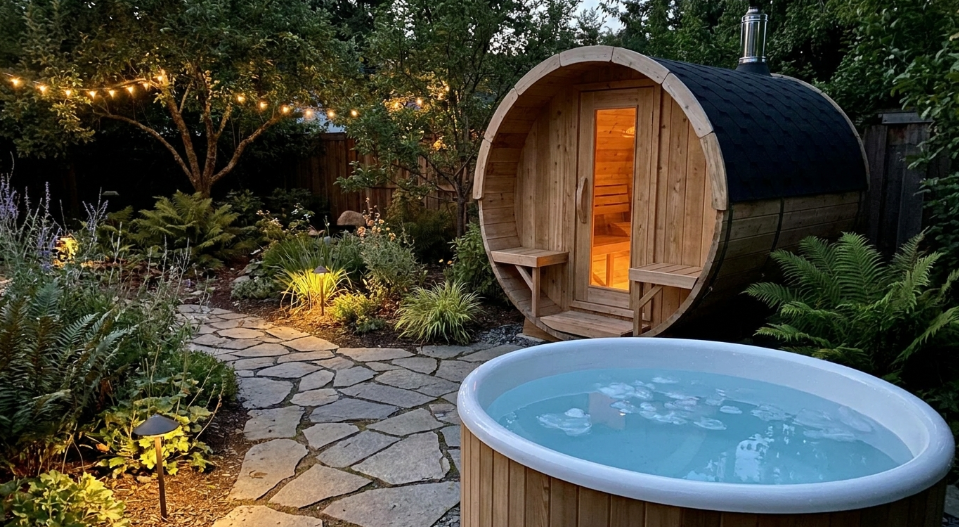
When a full-size cabin sauna does not fit the space or the budget, the three realistic substitutes are a sauna blanket ($100 to $300), a fold-flat infrared tent ($150 to $400), and a compact one-person infrared cabin ($1,500 to $2,600) sized for a closet, garage corner, or basement nook. Each one trades some of the enclosed, full-temperature feel of a traditional cabin for a smaller footprint and, in most cases, no wiring work at all. Picking between them mostly comes down to budget, available square footage, and whether the space is rented or owned.
How Much Room Does Each Option Actually Need?
A sauna blanket needs no floor footprint at all beyond wherever you lie down to use it, since it rolls up small enough for a closet shelf between sessions. An infrared tent needs a patch of floor roughly the size of a yoga mat, folded flat for storage the rest of the time. A compact infrared cabin is the biggest of the three, typically 12 to 20 square feet, which still fits into a large closet, a garage corner, or a basement nook that a full two-person traditional cabin, usually 40 square feet or more once you add clearance, never would.
What Does Each Option Cost, Including Any Hidden Extras?
A blanket or tent rarely comes with hidden costs beyond the unit itself, since both plug into a normal outlet and need no site work. A compact infrared cabin is a bigger jump, generally $1,500 to $2,600 for the unit, and while most models run on standard 120-volt power, it is worth confirming the circuit it will share has enough spare capacity before ordering, since running a space heater and a sauna cabin off the same 15-amp circuit can trip a breaker mid-session. None of the three compact options carries anything close to the $4,500 to $9,000 that a full outdoor cabin with heater and basic electrical work typically runs once installed.
Which Option Needs the Least Electrical Work?
Blankets and tents both plug into an ordinary wall outlet and need nothing further. Compact infrared cabins are slightly more involved but still generally avoid the dedicated 240-volt circuit that heaters above roughly 6 kilowatts usually require, since most one-person units draw well under that on standard household power. The one detail worth checking before buying any of the three is what else already shares that circuit; a bedroom outlet already running a space heater and a humidifier may not have headroom left for a sauna unit layered on top.
Which Option Fits a Rental Best?
All three generally work for renters, but blankets and tents are the safest bet for anyone worried about lease terms, since neither one involves drilling, wiring, or any permanent fixture. A compact cabin plugged into an existing outlet is usually fine too, though it is worth a quick check of the lease language around “fixtures” if the unit is large enough that it reads as more than a piece of furniture. None of the three requires the landlord conversation that a full outdoor cabin with a new electrical circuit and a concrete pad would.
Which Option Feels Closest to a Real Sauna Session?
A compact infrared cabin is the closest experience to a traditional sauna among the three, since it fully encloses the body at a steady temperature rather than heating one side of it. A tent gets partway there, enclosing everything but the head, which some people find claustrophobic and others do not notice after the first few minutes. A blanket delivers direct, localized heat while wrapped around the body, closer in sensation to a heating pad than a heated room, and it is the option most likely to disappoint someone specifically chasing the enclosed-room feeling of a cabin.
What Does the Research Actually Support Here?
It matters to be honest about what the evidence covers. A 2018 review in Mayo Clinic Proceedings and a related systematic review in Evidence-Based Complementary and Alternative Medicine both summarize cardiovascular and general wellness associations drawn almost entirely from traditional, cabin-style Finnish sauna sessions at higher temperatures over a full sitting. Older research in The American Journal of Medicine reviewing the benefits and risks of sauna bathing draws from the same tradition. None of that body of research was built on blankets, tents, or compact infrared cabins specifically, so it is fair to treat smaller alternatives as offering a related but separately unproven relaxation and sweat response, not a substitute backed by the same studies.
Which One Should You Actually Buy?
Start with the constraint that is hardest to change. If the space is genuinely fixed, a rented one-bedroom with no yard, for instance, a blanket or tent is the sensible starting point regardless of budget, since neither needs anything the space does not already offer. If a small footprint is available and the budget allows it, a compact cabin gets closer to the real experience and is easier to compare directly against full-size units when the time eventually comes to upgrade; SweatDecks lists both compact and full-size cabin dimensions and heater specs side by side, which makes that comparison easier than guessing from photos alone. If you already know a bigger space is coming within a year or two, it is reasonable to skip the compact purchase and put the money toward one full cabin later instead of buying twice.
Frequently Asked Questions
What is the cheapest heat therapy option if a full sauna will not fit? A sauna blanket is generally the lowest-cost entry point, usually $100 to $300, followed by a fold-flat infrared tent at $150 to $400.
Do compact infrared cabins need special wiring? Most run on standard 120-volt household power and do not need a dedicated 240-volt circuit, but always check the model’s amperage against the circuit it will share.
How much smaller is a compact cabin than a full-size sauna? Often 12 to 20 square feet, compared with 40 or more for a two- to three-person traditional cabin.
Are portable sauna alternatives backed by the same research as a full cabin? No. Most published research covers traditional cabin-style use; portable options have not been studied directly in the same way.
When does a compact unit make more sense than saving for a full cabin? When space is genuinely fixed, such as a rental with no yard. If more space might open up soon, some buyers prefer to wait and buy once.
References
- Cardiovascular and Other Health Benefits of Sauna Bathing: A Review of the Evidence, Mayo Clinic Proceedings, 2018
- Clinical Effects of Regular Dry Sauna Bathing: A Systematic Review, Evidence-Based Complementary and Alternative Medicine, 2018
- Benefits and risks of sauna bathing, The American Journal of Medicine, 2001